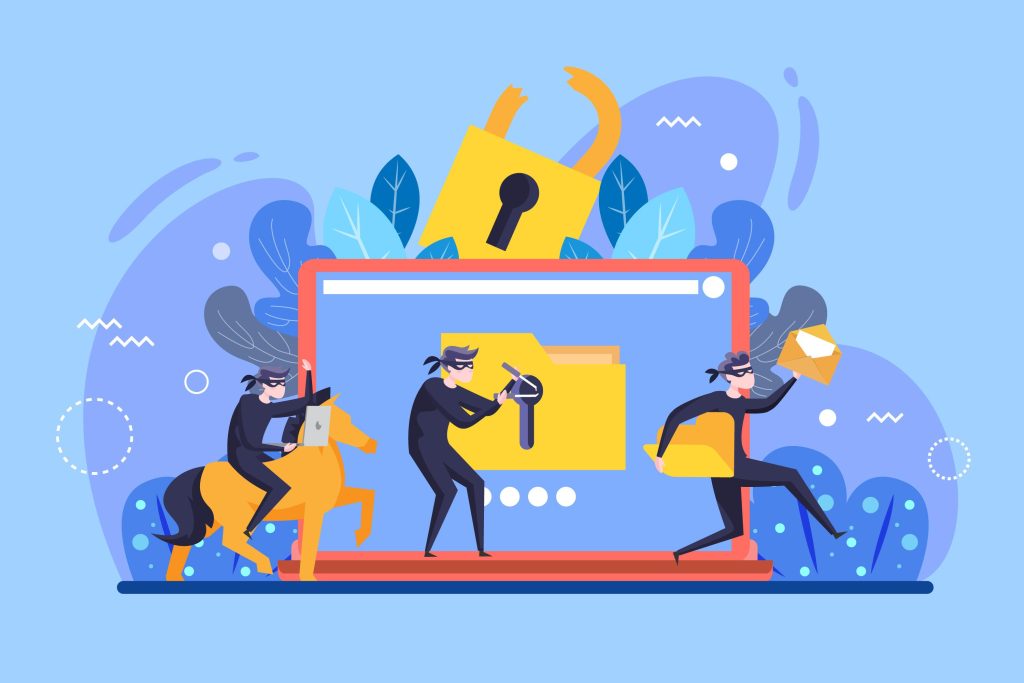
The digital landscape is constantly evolving, and with that comes an ever-growing list of cybersecurity threats targeting businesses, governments, and individuals. At secureCENTRX, we stay on top of these threats to help our clients protect their valuable data and systems. In this article, we’ll explore the most common cybersecurity threats currently making waves across the globe and provide insights into how to defend against them.
1. Ransomware Attacks
Ransomware continues to be one of the most significant cyber threats today. In these attacks, hackers gain access to a network, encrypt critical data, and demand a ransom in exchange for the decryption key. These attacks are highly disruptive, often paralyzing entire businesses or institutions, including hospitals and schools.
Key characteristics of ransomware:
- Attackers typically gain access through phishing emails or exploiting vulnerabilities.
- The ransom demanded can range from a few hundred to millions of dollars, often in cryptocurrency.
- Even after paying, there’s no guarantee that the data will be restored.
How to protect against ransomware:
- Ensure regular data backups are stored securely and offline.
- Implement strong email filters and train employees to recognize phishing attempts.
- Keep software, operating systems, and security tools up to date.
2. Phishing Attacks
Phishing is a social engineering attack designed to trick individuals into providing sensitive information, such as login credentials or financial data. These attacks often come in the form of fraudulent emails or websites that mimic legitimate organizations, tricking users into clicking malicious links or downloading harmful attachments.
Key characteristics of phishing:
- Attackers often impersonate trusted entities, like banks, tech companies, or government agencies.
- Phishing can take various forms, including spear phishing (targeted attacks) and smishing (SMS-based phishing).
How to protect against phishing:
- Educate employees on how to identify phishing emails and suspicious links.
- Use spam filters to block phishing emails.
- Implement multi-factor authentication (MFA) to protect accounts even if credentials are compromised.
3. Business Email Compromise (BEC)
Business Email Compromise involves attackers gaining access to a legitimate business email account, often through phishing or social engineering tactics. Once inside, they manipulate employees into wiring funds or sharing sensitive information. BEC attacks are particularly dangerous because they’re often highly targeted and difficult to detect.
Key characteristics of BEC:
- Targets high-level executives or employees with financial authority.
- The attackers often pose as trusted business partners or superiors.
- The stolen funds are usually moved quickly, making recovery challenging.
How to protect against BEC:
- Train employees to verify any requests for large transfers or sensitive information via secondary communication methods.
- Use email authentication tools, such as SPF, DKIM, and DMARC, to detect and prevent email spoofing.
- Limit the number of people with financial authority and regularly review permissions.
4. Distributed Denial of Service (DDoS) Attacks
In a DDoS attack, cybercriminals overwhelm a target’s servers or network infrastructure with a flood of internet traffic, rendering it inaccessible to legitimate users. While DDoS attacks don’t typically involve data breaches, they can cause significant disruptions, particularly for websites and services that rely on continuous uptime.
Key characteristics of DDoS:
- Attackers often use botnets—large networks of compromised devices—to generate traffic.
- DDoS attacks are frequently used as a smokescreen for other malicious activities, such as data theft or network infiltration.
How to protect against DDoS:
- Use a content delivery network (CDN) or DDoS protection service to absorb and filter malicious traffic.
- Implement rate-limiting and other network-level protections to prevent traffic spikes from overwhelming your system.
5. Insider Threats
While many cyber threats originate from external actors, insider threats—individuals within an organization who intentionally or unintentionally compromise security—pose a unique risk. These individuals may have access to sensitive data and systems, making their actions particularly dangerous.
Key characteristics of insider threats:
- Can be intentional (e.g., disgruntled employees) or accidental (e.g., employees mishandling data).
- Insiders often bypass external security measures, making it harder to detect breaches.
How to protect against insider threats:
- Implement role-based access control (RBAC) and the principle of least privilege to limit access to sensitive data.
- Monitor employee activity for unusual behavior or unauthorized access attempts.
- Foster a positive workplace environment to reduce the risk of malicious insiders.
6. Zero-Day Exploits
A zero-day exploit refers to the exploitation of a previously unknown vulnerability in software or hardware. These exploits are particularly dangerous because they can occur before the vendor has had a chance to issue a patch, leaving systems exposed.
Key characteristics of zero-day exploits:
- Attackers take advantage of vulnerabilities before they’re publicly disclosed or fixed.
- Zero-day attacks are highly targeted and often used in sophisticated cyber espionage campaigns.
How to protect against zero-day exploits:
- Use security software that includes behavior-based detection to identify and mitigate suspicious activities.
- Ensure your systems and software are regularly updated, and patches are applied as soon as they become available.
- Segment networks to limit the damage if an attack occurs.
7. Cryptojacking
Cryptojacking involves hackers covertly using a victim’s computing resources to mine cryptocurrency. These attacks usually go unnoticed, but they can significantly degrade system performance and increase energy costs over time.
Key characteristics of cryptojacking:
- Often delivered via malware or by exploiting vulnerabilities in websites.
- Affects the performance of infected systems and networks, leading to slowdowns.
How to protect against cryptojacking:
- Install reputable antivirus and anti-malware software that can detect cryptojacking scripts.
- Regularly monitor network and system performance for unexplained slowdowns.
- Educate employees about the risks of visiting unsecured websites and downloading untrusted software.
Conclusion
The world of cybersecurity is constantly shifting, with new threats emerging every day. From ransomware to insider threats, businesses must stay vigilant to protect themselves from these dangers. At secureCENTRX, we’re committed to providing cutting-edge cybersecurity solutions to defend against these common threats. Contact us today to learn how we can help you stay secure in an increasingly hostile digital world.
SEO Keywords: ransomware, phishing attacks, business email compromise, DDoS protection, insider threats, zero-day exploits, cryptojacking, cybersecurity solutions